Here at Friends of Grand Rapids Parks, we love cold weather. Why? Because there’s always work to be done and sometimes, snow makes that work a little easier—especially when it comes to conservation.
The Friends conservation program manages biodiversity in Grand Rapids’ parks and green spaces. This includes living organisms like trees, shrubs, grasses, flowers, mammals, birds, fungi, reptiles, amphibians, and insects. Biodiversity makes for healthy ecological communities and has been shown to improve human health!
A large part of our conservation work in Grand Rapids parks has focused on the removal of invasive plant species like buckthorn, bittersweet, garlic mustard, autumn olive, and more. Invasive species out-compete native species for nutrients and sunlight, can release toxins to the soil and water, and even choke the plants and trees we want to thrive.
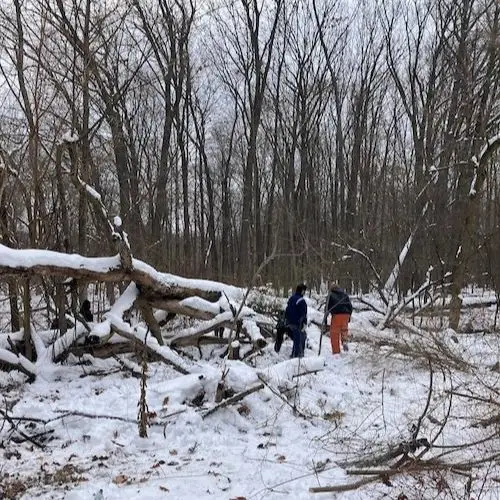
In the fall and winter, our conservation volunteers cut woody invasive plants back and then apply an herbicide called glyphosate directly to the stump. Glyphosate kills the plant by affecting plants’ root systems.
This herbicide only affects the undesirable plant and not the native species we want to protect. That’s because, in fall and winter, the sap flows down into the roots to store for the winter, making application in the fall and winter the ideal time. Glyphosate even works on dormant trees and shrubs.
In spring, the direction of flow within the tree or shrub changes. Sap pushes upward to feed young leaves and flowers, so the herbicide is less effective.
More Benefits to Winter Conservation Work
As much as we love fighting our way through brush, navigating natural areas is easiest in the winter when many of those plants have died back. Plus, some woody invasives keep green leaves for far longer than native plants, so working in the winter makes them easy to spot.
Winter is also a great time to avoid trampling native plants, like Virginia bluebells—a threatened species in Michigan. Although prairie species can be invigorated by some disturbance, as they are adapted to herds of bison, many of our forest species are vulnerable to people stepping on them. Forest species are vulnerable, especially when they’re flowering. For example, a trillium can take up to seven years to bloom. If squished, it will not be able to reproduce.
You Belong Out Here—Even in Winter
Fresh air, exercise, and vitamin D are good for you all year round. In winter, when it can feel harder to get outside, they become even more important. We love conservation work because it’s also a great way to get outside and exercise in a way that also feels productive and like you’re making the world a better place. Our conservation work days are also a great time to meet and connect with others in our community. Make a friend, protect an ecosystem—it’s all in a day’s work!
Want to Learn More About Winter Conservation? Join Friends for a Conservation Volunteer Workday!
If you’re interested in conserving the biodiversity in Grand Rapids’ parks, join us for a conservation workday! We’re out here, even in the snow! Our volunteers have a blast cutting down woody invasive species, learning more about conservation, and getting to know each other. There are plenty of opportunities to get involved on both weekdays and weekends. We encourage you to explore our conservation volunteer opportunities and make a difference that will benefit the parks for years to come.