Explore stories of community impact, conservation, and the latest updates on how Friends of Grand Rapids Parks is working to enhance and protect our city’s vibrant green spaces.
Featured News & Updates
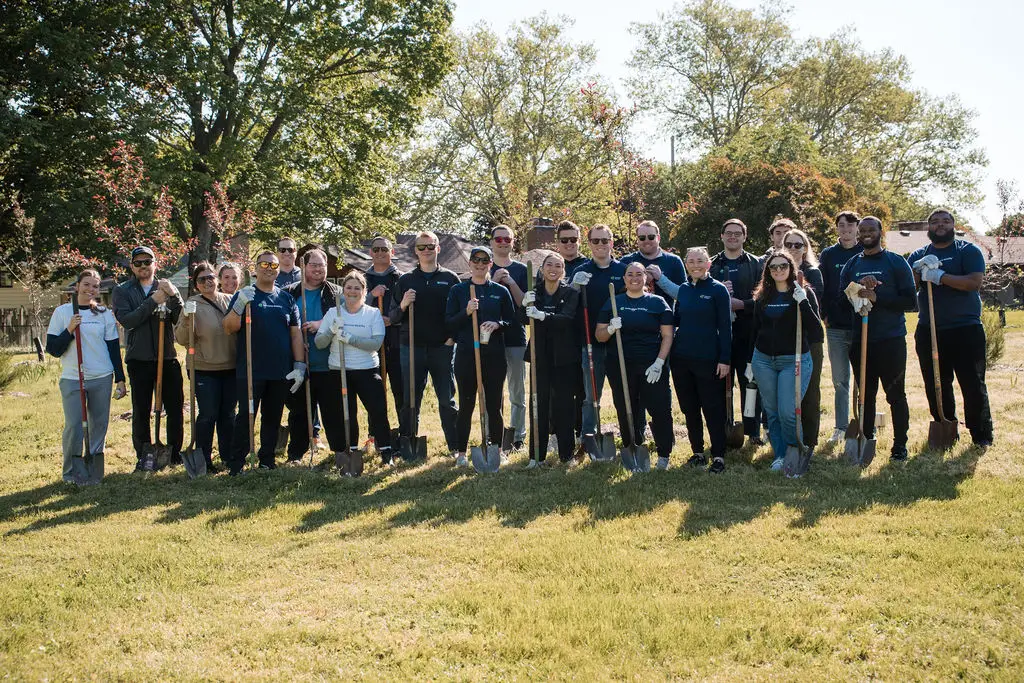
Fall 2026 Volunteer Opportunities with Friends of Grand Rapids Parks
Updates
We’re excited to share a few new volunteer opportunities for people interested in working in Grand Rapids parks, on Grand Rapids trails, and in our community’s green spaces this fall! Let’s get volunteering, Grand Rapids!
Evening Conservation Volunteering Opportunities Now Available
Since adding Community Conservationist Anna to the team, we’re able to offer what you’ve been asking for—evening conservation volunteering shifts! Thursday evening conservation work is now on the calendar. These projects will take place in parks around the city, and often support groups working with our Park Stewardship Program.
Conservation volunteering opportunities include:
Thursday evenings in October
Every Friday morning
One Saturday per month
Fall is a great time to do woody invasive removals, so this is our focus during the fall season. All hand tools and training will be provided.
Trail Maintenance Volunteering Shift to Weekend Mornings
As the days get shorter and colder, we’re shifting trail workdays to Saturday mornings to make the most of the fall days! Keep an eye on our website for updated trail maintenance workdays as the seasons continue to change.
Note, due to the specialized nature of trail maintenance work, we ask all trail volunteers to complete the Trails Steward classes prior to volunteering.
Tree Planting Volunteering is Back for the Fall Season
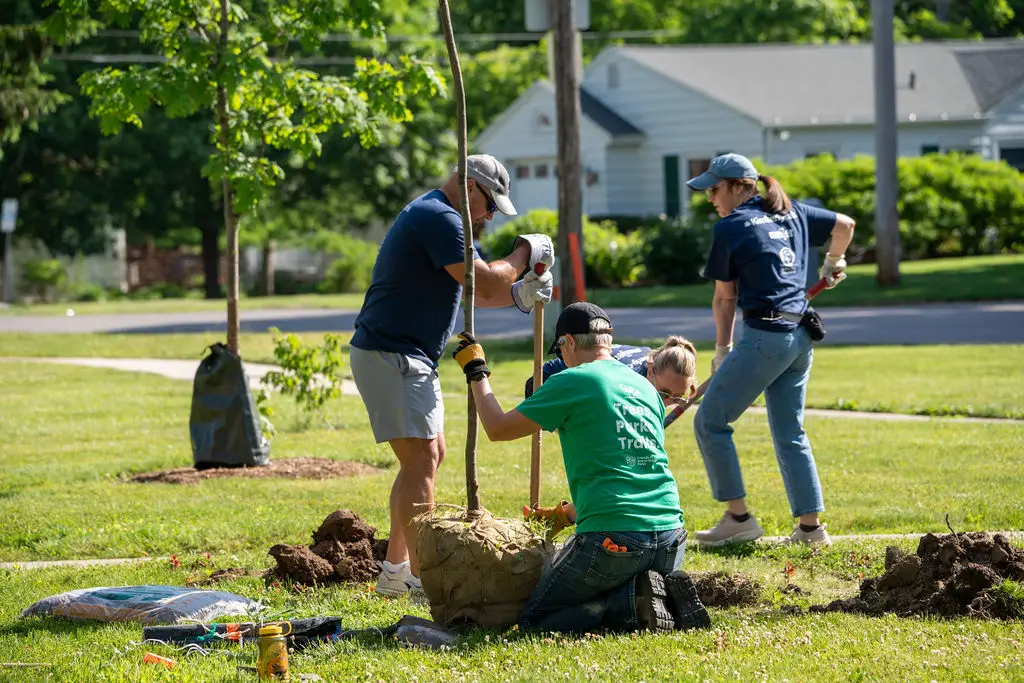
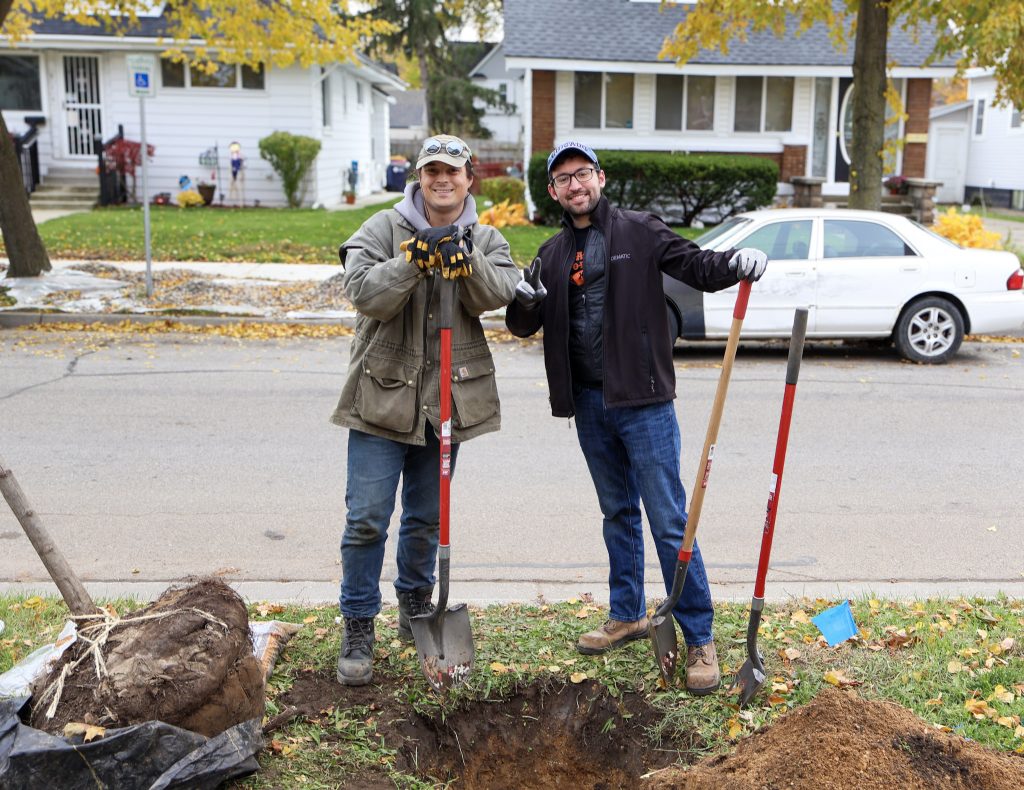
We’re excited to plant more trees with you this fall! We typically plant trees in the right-of-way between the sidewalk and the road.
Tree-planting workdays will be on:
Saturday mornings
Saturday afternoons
As always, our forestry team will go over how to plant a tree during every shift, so if you’ve never planted with us, we’ll teach you what you need to know, as well as providing all the tools you’ll need.
Thanks for Volunteering in Grand Rapids with Us!
To explore volunteering opportunities and sign up for shifts, please check out our volunteer page. Hope to see you out there!
How Friends of Grand Rapids Parks works in public parks and green spaces, and how we work with the Department of Parks and Recreation
Friends of Grand Rapids Parks (Friends) is fortunate enough to work closely with the City of Grand Rapids’ Parks & Recreation Department and their Forestry Division. The City permits tree plantings, conservation projects, and other work in Grand Rapids’ public green spaces. This collaboration allows us to connect community volunteers to projects and spaces they care about so we can steward them together. Everything we do is collaborative and involves years of multi-stage strategic planning.
Types of Forestry Projects We Do
Friends forestry volunteers and staff work alongside the City’s Forestry Division to grow and maintain our urban forest. We work almost exclusively on public property, including parks and tree lawns between sidewalks and roads (known as the right-of-way). Our team focuses on planting, watering, mulching and pruning young trees, supporting healthy growth and structural development.
When we prune trees, we require that a Friends Forestry staff member is present to guide the work and support if issues arise. These volunteers are specially trained and supervised to ensure pruning is done safely and correctly. The City does allow residents to prune branches less than 1” in diameter on their street trees for clearance without needing a permit, although we strongly encourage residents to take our pruning class to learn the best (and safest) methods for doing so.
Occasionally, some volunteers who have participated in extra training are asked to plant trees. These volunteers work closely with the staff at Friends to make sure trees are correctly and safely planted. All trees planted on public property in Grand Rapids require a planting permit from the City Forester, and the staff is aware of which planting locations have been approved.
Sometimes a young tree might need extra support like tree ties/staking or bracing. Our staff uses our professional judgement on what arboricultural techniques will be best for the tree and will either complete the work ourselves or with the help of our volunteers. Sometimes the City Forestry Division will ask for our assistance in removing old stakes and hardware from trees, and we work with our volunteers on which trees to remove them from.
Types of Conservation Projects We Do
Friends’ conservation volunteers improve the ecological health of public lands and waters within Grand Rapids. Primarily, we remove invasive plant species that displace native species. Occasionally, we plant native flowers, grasses, shrubs, and trees in highly degraded areas to jumpstart biodiversity, stabilize streambanks, and improve wildlife habitat. This is important because the limited natural areas are oasis for wildlife, especially migratory species like monarchs and birds during their hazardous journey.
The natural areas we manage are part of an overarching management plan that has been reviewed and approved by the City. Friends staff meets regularly with City staff to discuss and authorize any specific work performed on City-owned properties. Management areas, (sometimes referred to as zones) are selected by a process that considers:
Current quality of the site (based on floristic assessments)
Presence of rare or uncommon species (flora or fauna)
Likelihood of sustainable success
Continuity with other projects
Community interest
In addition to public and private conservation workdays, Neighborhood Conservationists are essential to achieving our conservation goals. After completing courses on ecology, invasive species, working outdoors safely, and attending a workday, these volunteers choose a park to work in independently.
Within that park, Friends’ staff assigns them a zone in which they can work. Neighborhood Conservationists cannot work outside this zone without prior approval. Work is tracked in GIS to document change over time and demonstrate our collective effort to improve our city’s natural areas. Additionally, they sign an agreement to follow Friends’ policies and procedures because they are representing Friends in partnership with the City.
These trained and authorized volunteers have significantly increased the capacity to work by working outside scheduled workdays.
Projects We Don’t Do
Conservation
Friends’ conservation staff, volunteers, and Neighborhood Conservationists do not work outside the areas approved by Grand Rapids Parks & Recreation staff, including outside public natural areas, unless part of an authorized project (i.e. rain garden). Conservation volunteers also do not spray herbicide or use power tools, except cordless drills under supervision.
Forestry
Friends’ forestry staff and volunteers don’t work on mature trees that are likely to have extra safety considerations when pruning, or trees that have any trunks or branches within 15 feet of power lines. We also do not work on private property, although we teach classes that help residents learn to prune and care for the trees on their own property.
We value our relationship with the City and strive to make sure that it remains a mutually-beneficial partnership through aligned priorities, goals, and communication!
If you want to learn more about how Friends and the City work together, have a question about a specific project or work zone, please reach out to us. If you have a forestry-related issue or concern, please call 311.
Why We Don’t Exclusively Plant Native Street Trees
Trees
A question we get asked a lot is if we exclusively plant native trees. While we adore our native trees, Grand Rapids’ urban environment is not a native environment. The heat exposure, salt spray, and compacted soils are like nothing we’d find in our native forests. So sometimes, the best trees for a city street environment is a species that’s not originally from Michigan, although many of them are.
About 80% of the trees we plant each year are native varieties, and the remaining 20% are non-native and non-invasive. These are trees that handle our city’s hot, humid summers, and cold, windy winters. They can tolerate salt spray in the winter and soil that has seen a lot of construction over the 150 years of our city’s existence. They don’t spread seeds easily and don’t crowd out other plants. In short, they’re a good and resilient neighbor!
How Factors like Power Lines and Species Diversity Impact Street Tree Selection
An important rule of thumb in urban forestry is the 10/20/30 rule. Ideally, our city’s canopy should have no more than 10% of one species (for instance, sugar maple), no more than 20% of a genus (Acer, the genus that includes all maples), and no more than 30% of a family (Sapindaceae, the tree family that includes maples, horse chestnuts, and buckeyes). By improving species diversity in our canopy, we’re strengthening our city’s urban forest against pests and diseases for decades to come.
However, if we only planted native trees that can survive the harsh street environment, we’d be significantly limiting our tree diversity.
For example, when powerlines are present overhead, we can only plant trees that are in the small size class–25’ or less at maturity. With this approach, eventually we’ll eliminate the need for clearance pruning around powerlines. However, we really only have two native trees that can survive as a street tree without growing into power lines–eastern redbuds and serviceberries. (And occasionally, American hornbeams.)
With powerlines covering nearly half of every street in Grand Rapids, that would mean half of the city’s trees would be only two or three species–far above the goal of 10%. Forestry is a long game; we’re trying to anticipate problems that don’t exist yet that might come along in the next 100 years. So if we ever had a disease that affected serviceberries or redbuds, a massive number of our city’s trees could be lost in a very short amount of time.
When Our Best Options Are Non-Native Street Trees
When selecting non-native trees, we look for species that don’t spread seeds easily and don’t crowd out native plants. Our City Forester puts a lot of work into researching this before putting species on the recommended species list. Often, we select hybrids of our native trees as well.
A great example of this is the elm. American elms were nearly wiped out decades ago by Dutch elm disease (DED). There are dozens of elm hybrids of American and Asian elms, giving them the characteristics of an American elm as well as the Asian elms’ natural resistance to DED. These hybrid trees provide a lot of the same benefits to humans and wildlife and have proven their hardiness in tough environments.
Choosing the Best Street Tree for Your Unique Spot!
Every tree we plant is carefully selected by an on-staff ISA-Certified arborist. Our Forestry team
works closely with the City of Grand Rapids’ Forestry Division to choose trees that align with their standards and long-term goals, upholds the ISA code of ethics, and make our city a safe, beautiful, and tree-filled place for decades to come. We also do our best to accommodate residents’ requests for their street trees so if someone wants flowers, fall color, or some other unique characteristic, we want them to have it! In short, we love planting trees that make people’s lives better.